
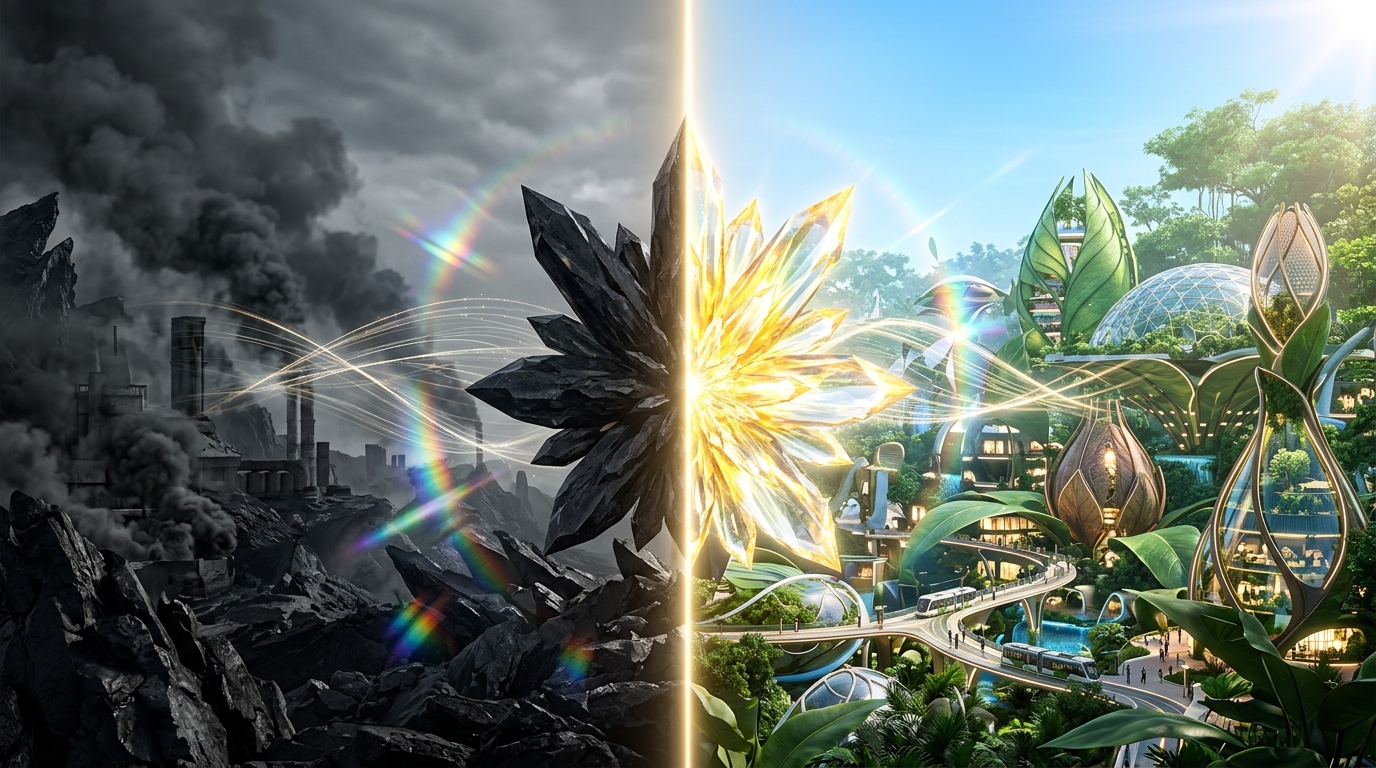
Beyond Oil & Gas: The Next Energy Frontier
A business leader’s guide to the non-carbon energy sources reshaping supply chains, procurement, and long-term strategy from nuclear fission and fusion to waste-to-energy and beyond.
Energy strategy has become a board-level question. Whatever your sector, the cost, reliability, and carbon intensity of the power behind your operations now shapes procurement decisions, investor conversations, and long-term risk planning and oil and gas are no longer the only default.
This isn’t a call to bet everything on one technology. It’s a map of the non-carbon sources maturing at very different speeds, and what that means for how you plan.
The numbers behind the shift
A handful of figures that explain why this is moving from a sustainability topic to a supply-chain one.
HALEU Enrichment Range
The U-235 concentration band that separates high-assay fuel from the low-enriched uranium powering today’s reactors.
Of New SMR Designs Need HALEU
More than half of small modular reactor designs in development depend on fuel not yet produced at scale outside Russia and China.
Waste-to-Energy Market by 2032
Projected global sector revenue as ageing landfill capacity and rising power demand push waste toward the grid.
Fusion: Still Pre-Commercial
2026 progress is real but incremental engineering and supply-chain work, not yet grid-scale power.
Six non-carbon paths, six different timelines
From technology already on the grid to approaches still in the lab.
Nuclear Fission
Today’s workhorse: splitting heavy atoms (mostly Uranium-235) to release heat that drives a turbine. It already supplies a meaningful share of the world’s low-carbon electricity and runs at very high uptime.
SMRs, LEU & HALEU
Small modular reactors promise faster builds and lower upfront cost. Most rely on HALEU (5–20% U-235) rather than the LEU (under 5%) used in conventional plants a supply chain still being built out in the West.
Nuclear Fusion
Fusing light atoms (deuterium and tritium, isotopes of Hydrogen) releases far more energy per gram than fission with none of the long-lived waste. Multiple approaches magnetic confinement, laser, field-reversed configuration are advancing, but commercial power remains years out.
Waste-to-Energy
Converting municipal or industrial waste into electricity and heat through incineration, gasification, or anaerobic digestion. It solves two problems at once landfill pressure and baseload power and is scaling fastest where both are acute.
Green & Blue Hydrogen
Hydrogen, the lightest element on the periodic table, can store and move energy generated elsewhere. "Green" hydrogen is split from water using renewable electricity; "blue" is produced from natural gas with the carbon captured.
Enhanced Geothermal
New drilling techniques borrowed from oil and gas let developers reach useful heat almost anywhere, not just at tectonic hotspots turning geothermal from a niche resource into a potential always-on power source.
The elements doing the heavy lifting
Every one of these technologies traces back to a handful of elements worth knowing by name.
Uranium
The primary fuel for fission today, enriched to different grades (LEU, HALEU) depending on the reactor.
Thorium
A more abundant potential fission fuel with a different waste profile; molten-salt thorium reactors remain an active R&D track.
Hydrogen
Fuel for fusion (as deuterium and tritium) and a storage medium for renewable electricity via green hydrogen.
Lithium
Not a fuel itself, but the battery chemistry that lets intermittent sources like solar, wind, and even excess reactor output be stored and dispatched.
Common misconceptions to avoid
The assumptions we see trip up otherwise sound energy planning.
"Nuclear" Means One Thing
Fission and fusion share a name but almost nothing else in timeline, technology, or investment profile. Treating them as interchangeable leads to poor planning.
Fusion Is Just Around the Corner
Independent 2026 assessments describe fusion progress as incremental and engineering-heavy real momentum, but not a near-term grid solution.
Waste-to-Energy Is "Free" Power
Feedstock logistics, emissions controls, and permitting all carry real cost and lead time. It’s a strong option, not a shortcut.
HALEU Is Already Available
Commercial-scale HALEU production currently sits mostly with Russia and China. Western supply is being built, but isn’t yet at scale.
One Technology Will Win
The businesses planning best aren’t betting on a single source they’re building strategies that flex as each technology matures on its own timeline.
The businesses that get ahead aren’t betting on a single fuel they’re building energy strategies that can flex as fission, fusion, and waste-to-energy each mature on their own timeline.
What this means for your business
A realistic horizon for planning around non-carbon energy, whatever your sector.
Assess & Secure
- Audit current energy exposure & cost risk
- Evaluate on-site waste-to-energy where applicable
- Track SMR & HALEU supply-chain announcements
- Model long-term power purchase agreements
Pilot & Diversify
- Engage early SMR & advanced-fission projects
- Pilot green hydrogen for storage or heavy transport
- Diversify sourcing for lithium, uranium & rare elements
- Build fusion & geothermal into scenario planning
Scale & Optimise
- Blend multiple non-carbon sources by use case
- Formalise supply-chain resilience for critical elements
- Reassess as fusion & EGS technologies mature
- Embed energy strategy into core business planning
Non-carbon energy questions
What business leaders ask us most when this topic reaches their desk.
Plan your energy strategy with confidence
THE DISTINCT 5 helps businesses assess energy risk and opportunity across nuclear, waste-to-energy, and emerging sources. Book a complimentary strategy session.